As many of you know, I have carried out probably hundreds of Tiffany-style lamp repairs over the years. Occasionally I have worked on curved glass shades even though I work with flat glass sheets, coming up with various creative ideas to refurbish people’s treasured lampshades so they can be enjoyed again.
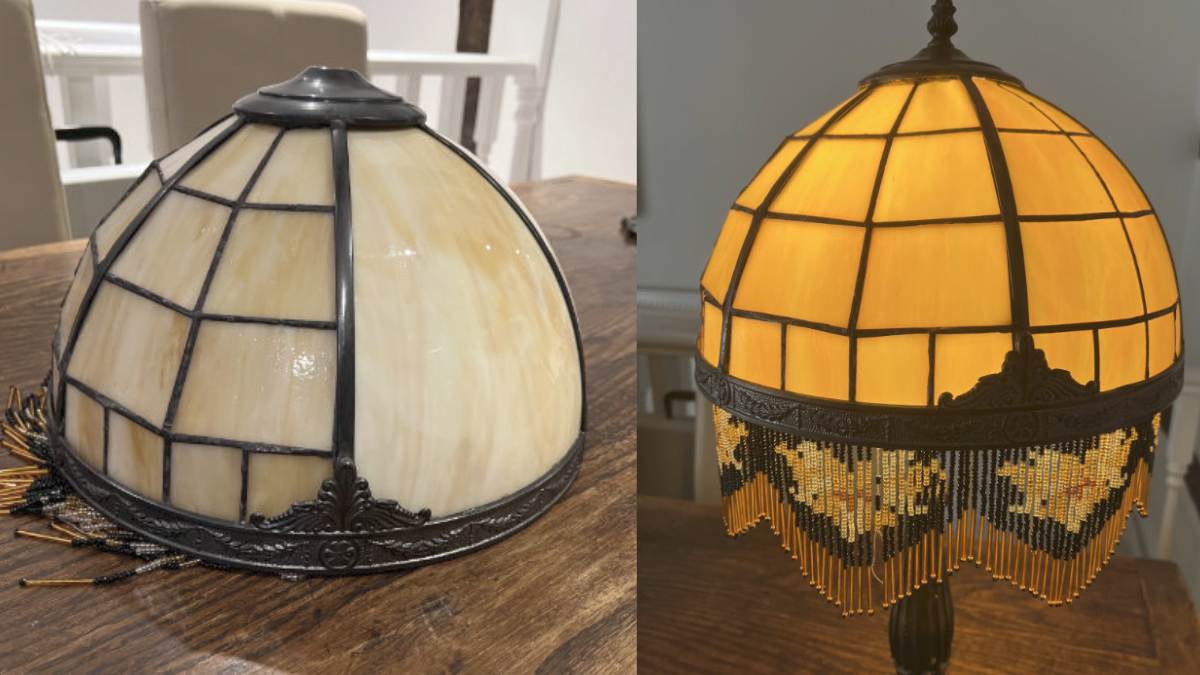
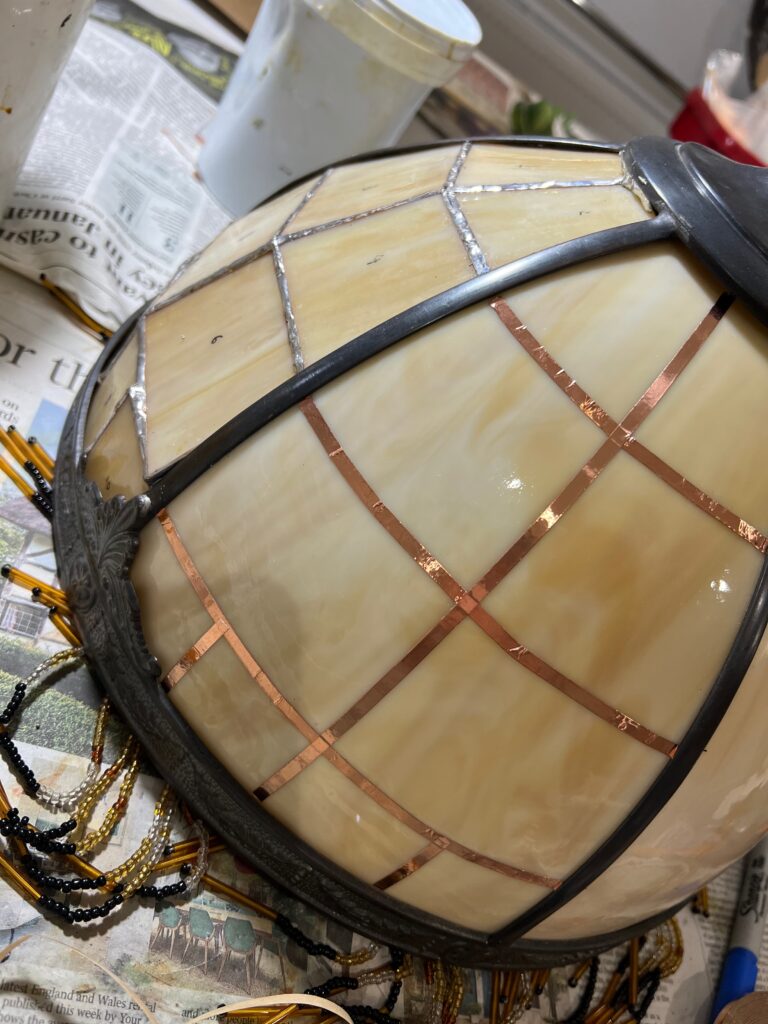
One interesting case came up of a curved panel shade that had lovely glass beaded fringing. Unfortunately two of the curved panels were smashed. Therefore I cut a series of flat pieces of glass that were carefully sized to make up the missing panels. This meant the small pieces had to be copper foiled and soldered together before blacking to match the existing metal frames. This repair was very obvious against the original smooth yellow curved panels. As a result, as I had done for previous lamps I had repaired in this way, I carefully added copper foil strips to the rest of the glass shade to match the lines of the replacement panels, soldered them and blacked them to make the new panels blend in better with the original ones.
I was very pleased with the result. However, when the client saw the finished shade she was a bit upset, explaining that she was hoping for a more ‘kintsugi’ effect. Kintsugi is a Japanese method of repairing ceramics, where the broken pieces are fitted back together with gold or other precious metal. This embodies the ‘wabi-sabi’ philosophy of finding beauty in imperfection and resilience. She wanted to keep as much as possible of the original look of the shade and celebrate the repair and its difference. The first version is shown on the right in the main image and the client’s preferred version is shown on the left.
I told her not to worry and that I would remove the blacked copper foil that I had added to the undamaged panels. When I had done this the customer was delighted that she had got what she wanted and could use her treasured lampshade once more.




0 Comments